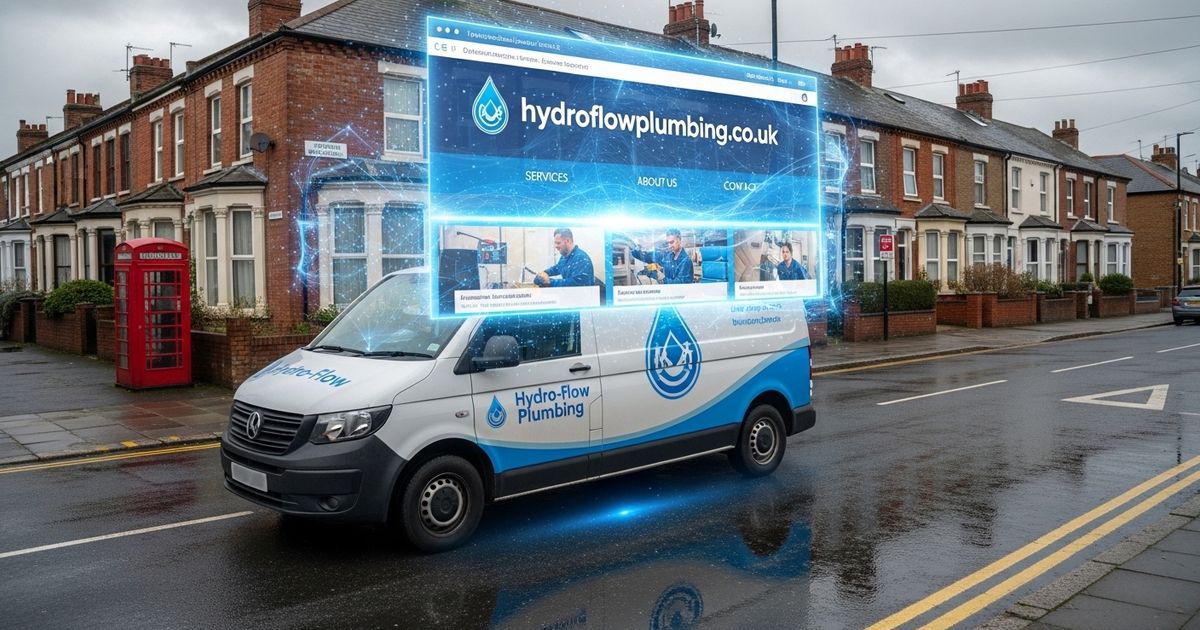
A small business website is a must have for any small business in the UK. Before someone calls you, books you, or walks through your door, they will Google you for information.
If your business does not show up, or your site looks unprofessional or confusing, you don’t get the sale.
While you can build a website yourself, you need to build it properly. A good website becomes your best salesperson. A poor one becomes an online brochure that actually costs you work.
Here is how to do it properly.
Step 1: Be Clear About What Your Website Is For
Before you choose a domain name or install anything, get clear on purpose. Most small business websites are built backwards. They start with colours and logos instead of asking what the site is actually meant to achieve.
A website without a clear goal rarely performs well for a business.
Ask yourself:
- Is this website meant to generate enquiries?
- Is it for bookings?
- Is it to sell products?
- Is it to build authority and trust?
- Is it supporting a local service business?
If you cannot clearly state the main action you want visitors to take, that is where you should start.
At Boosh, this is called the ‘Discovery’ phase, and it’s extremely important if the conversion journey is going to inform the design of your website.
Step 2: Choose a Good Domain Name
Your domain name is your online address. It is what people type into a browser and what appears on your vans, invoices and business cards. It should be simple and (really take this in) future-proof.
This is not the place to get overly clever.
When choosing a domain:
- Keep it short
- Make it easy to spell
- Make it easy to say out loud
- Keep it brand-focused rather than keyword-stuffed
- Consider whether .co.uk or .com suits your audience
Avoid long strings of keywords like bestplumberinmanchester247.co.uk. It looks spammy and limits you if your business expands.
Simple, clear and flexible always wins.
Step 3: Get Reliable Hosting
Hosting is where your website lives. It is the server that stores your files and delivers them to visitors when they load your site.
It can be tempting to go for the cheapest hosting available, but there is a significant cost to your business. If hosting is poor, your website will be slow or down altogether. If your website is slow, people leave. More importantly, however, a website with slow hosting just won’t rank well in search listings.
For most UK small businesses, decent starter hosting should cost under £100 for the first year.
Look for:
- SSL included
- Automatic backups
- Strong uptime reputation
- Clear support options
- Good reviews
Hosting is one of those things you never think about when it works. When it does not, it becomes very obvious very quickly.
Step 4: Choose the Right Small Business Website Platform
There are plenty of website builders advertised everywhere. They promise speed and simplicity. For some projects, they are fine.
But you should think beyond getting online quickly. You should think about where your business will be in two or three years, which is where Wix, Squarespace and Shopify handicap businesses. Anyone who uses tools for a living understands that a cheap tool may get you a fast result, but it won’t last long or perform as you’d wish. Don’t get locked in and regret it.
Many small businesses choose WordPress because it offers flexibility, control and strong SEO capability. It powers a large portion of the internet for a reason. For a small business website with intention to scale and grow, there is a reason Boosh Digital build with WordPress.
When choosing a platform, consider:
- How much control you want
- How important SEO is
- Whether you may expand services
- Whether you may add ecommerce later
- How easy it is to maintain
The easiest option today is not always the smartest option long term.
Step 5: Structure Your Website Properly
Structure is more important than design trends. A visitor should understand what you do and what to do next within seconds.
If web design is an art, the art is in the customer journey towards conversion, not in the graphics and colours, which is where we see many clients place their focus. Confusion costs enquiries.
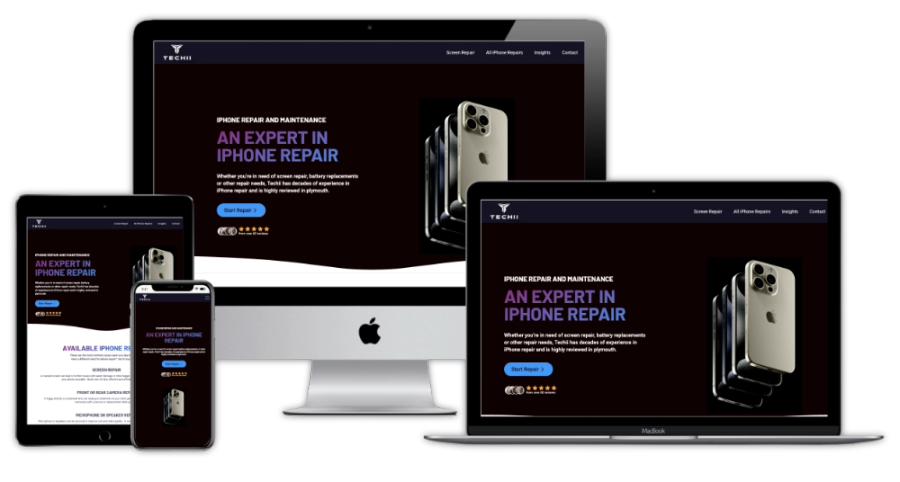
At minimum, your site should include:
- A clear Home page
- An About page that builds trust
- A Services page explaining what you offer
- Reviews or testimonials
- A Contact page
- Legal pages relevant to UK businesses
Your home page especially should quickly answer:
- What do you do?
- Who do you help?
- What should I do next?
When it comes to any website, but especially a small business website that needs to pack a fast punch and earn that conversion, clarity always beats clever design.
Step 6: Write Clear, Useful Content
Content is where many small business websites falter. This does not just refer to ‘blog content’, but to every, single word on your web page. Visitors get bored very easily on a web page, so it’s important not to ramble, not to speak in uninspiring corporate jargon, not to mix messages.
You do not need to sound impressive. You need to sound clear.
When writing your pages:
- Speak to your customer’s problem
- Be specific about your services
- Mention your location if you serve locally
- Include clear calls to action
- Add proof where possible
A well-designed site with vague messaging will not rank or convert. Clear communication builds trust.
Step 7: Get the SEO Basics Right
Search engine optimisation does not have to be complicated, but it does need to be considered from the start.
If you ignore it completely, you make life harder later.
At a basic level, make sure you:
- Use clear page titles
- Naturally include relevant keywords
- Optimise images so they are not oversized
- Ensure your site loads quickly
- Make it mobile-friendly
- Set up a Google Business Profile if you serve locally
A small business website may not be able to rank against the big giants, but it can literally put your business on the digital map for local SEO, and that’s where the cash flow comes from. SEO is about structure and consistency. If the foundations are right, growth becomes easier.
Step 8: Test Everything Before Launch
Before you hit publish, slow down and check the details. Small mistakes can undermine credibility.
Before launching, make sure you:
- Test your contact forms
- Click every link
- Check spelling and grammar
- Test on mobile and tablet
- Confirm your phone number and email are correct
- Optimise images for speed
A small business website’s main goal is to establish trust and professionalism, so it’s important to ensure your website conveys that in look, feel and function.
It sounds basic, but these are the details that separate professional from rushed.
Can You Build It Yourself?
Yes, you can.
Many small business owners start by building their own site. It can be a good learning experience and it keeps upfront costs low.
Just be realistic.
DIY websites often:
- Lack clear structure
- Miss SEO fundamentals
- Fail to convert visitors
- Need rebuilding within a couple of years
There is a difference between having a website and having a website that actively supports your growth. Many business owners find that the time they spent wrestling to build a mediocre or poor website was wasted against the leads they could have received in the lifespan of the site they built.
There is opportunity cost to an amateur website.
How Much Does a Small Business Website Cost in the UK?
Costs vary depending on whether you build it yourself or hire a professional.
DIY route:
You may spend under £200 for domain, hosting and basic tools.
Professional build:
Typically from around £800 upwards depending on complexity, functionality and strategy.
The bigger question is not the build cost. It is what the website needs to achieve. If your website is not bringing enquiries or supporting growth, the hidden cost is lost opportunity.
Final Thoughts
Creating a small business website is not about ticking a box. It is about building credibility and making it easy for customers to trust you. A website is the most important digital asset a business can own, so it makes sense to ensure it functions as it should.
Get these fundamentals right:
- Clear purpose
- Strong structure
- Simple domain
- Reliable hosting
- Clean design
- Useful content
Do that well and you will already be ahead of many competitors.
And if you would rather focus on running your business while someone builds a website that is structured properly from the start, that is exactly what we do at Boosh Digital.
Your website should not just exist.
It should work.